Danfoss HVAC Controls by Industry

Our valves, sensors, drives, and controllers are specified across six core sectors where precise temperature and pressure control determines product quality, energy costs, and regulatory compliance.

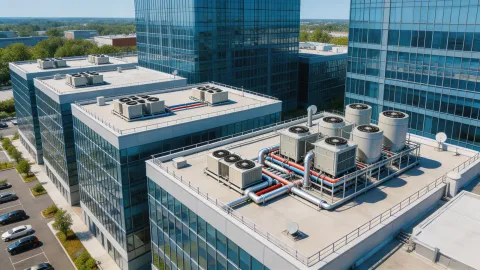
Commercial building HVAC systems

Commercial Buildings

Fan coil valves, VFD drives for AHU fans and chilled water pumps, room thermostats, and BMS-connected controllers for office towers, hotels, hospitals, and shopping centers. Energy reduction targets of 25-40% achievable through variable-speed pump and fan operation.

A 35-story office complex in the Middle East retrofitted 120 fan coil units with electronic expansion valves and VFD-driven chilled water pumps, connected via BACnet to the existing BMS. Post-commissioning energy monitoring over 12 months showed a 32% reduction in HVAC electricity consumption compared to the previous fixed-speed system, with a measured payback period of 2.8 years.

Discuss Your Project →

Data center precision cooling

Data Centers

Electronic expansion valves for CRAC/CRAH units, high-accuracy temperature and humidity sensors, VFD drives for cooling tower fans, and leak detection systems. Designed for PUE optimization in Tier III and Tier IV facilities.

A Tier III colocation facility in Northern Europe replaced fixed-orifice expansion devices in 48 CRAH units with electronically controlled EEVs and added VFD drives to condenser fan motors. Over a 6-month measurement period, the facility recorded a PUE improvement from 1.58 to 1.41, reducing annual cooling energy costs by approximately EUR 180,000.

Discuss Your Project →

Food processing refrigeration

Food & Beverage

Refrigeration controllers for cold rooms and blast freezers, solenoid valves for ammonia and CO2 systems, pressure sensors for process cooling loops. HACCP-compatible designs with stainless steel housings and IP67 ratings.

A seafood processing plant in Southeast Asia installed programmable refrigeration controllers and PT1000 temperature sensors across 8 blast freezer tunnels operating at -35°C with R-717 (ammonia). The system reduced product core-freeze time by 18% and cut refrigerant-related false alarms by 90% through calibrated pressure differential monitoring.

Discuss Your Project →

Pharmaceutical temperature control

Pharmaceutical

Precision temperature sensors with ±0.1°C accuracy for GMP-regulated storage, electronic expansion valves for cleanroom AHU coils, and validated control systems meeting 21 CFR Part 11 data logging requirements.

Discuss Your Project →
Cold chain logistics

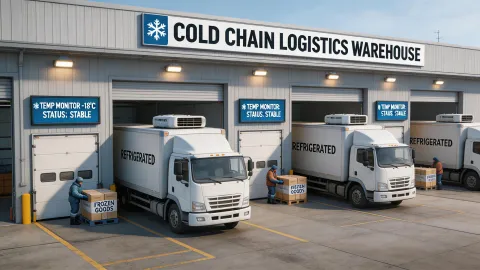
Cold Chain Logistics

Transport refrigeration controllers, door-zone air curtain sensors, dock temperature monitoring, and cloud-connected alarm systems for maintaining cold chain integrity from warehouse to last-mile delivery.

Discuss Your Project →
Industrial process cooling

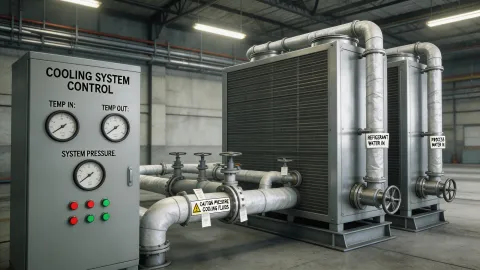
Industrial Processing

High-pressure solenoid valves, vibration-resistant sensors, and ATEX-rated controllers for chemical plants, refineries, and manufacturing lines requiring continuous process cooling at temperatures from -40°C to +150°C.

Discuss Your Project →

Component Selection Considerations

Choosing the right HVAC control components requires balancing multiple engineering and economic factors. Below are two key trade-offs our application engineers encounter frequently.

Refrigerant Transition: Natural Refrigerants vs. Synthetic Low-GWP HFOs

The Kigali Amendment and EU F-Gas Regulation (517/2014, revised 2024) are driving a global phase-down of high-GWP HFCs. System designers face a fundamental choice between two pathways:

Natural Refrigerants (CO2 / R-744, Ammonia / R-717, Propane / R-290)

Zero or near-zero GWP, no patent dependencies, and lower operating costs at scale. CO2 transcritical systems are increasingly viable even in warmer climates with advances in gas cooler and ejector technology. However, natural refrigerants introduce flammability (R-290, A3 class) or toxicity (R-717) concerns that require specialized system design, safety ventilation, and trained service technicians.

Synthetic Low-GWP HFOs (R-1234yf, R-1234ze)

Drop-in compatibility with existing HFC infrastructure means lower upfront retrofit costs and a faster adoption curve for the existing technician workforce. No flammability or toxicity risks comparable to naturals. However, HFOs carry patent licensing costs, concerns about PFAS degradation byproducts, and their long-term regulatory status remains under review in the EU.

Inverter (Variable Speed) vs. Fixed Speed Compressors

The choice between inverter-driven and fixed-speed compressors affects both capital expenditure and lifecycle energy costs. The optimal decision depends on the load profile of the application:

Inverter / Variable Speed Compressors

Deliver 30-50% energy savings at part-load conditions, provide precise temperature control with ±0.5°C stability, and reduce mechanical stress through soft-start capability. Essential for variable-load applications such as data centers and commercial buildings where cooling demand fluctuates with occupancy and weather.

Fixed Speed Compressors

Lower capital cost by 15-25%, simpler control logic, easier field maintenance, and a proven reliability record in constant-load applications. Preferred for industrial process cooling, ice making, and cold storage where the cooling load remains relatively stable and the payback period for inverter technology exceeds 7 years.

Have a Specific Application?

Our application engineers can recommend the right components for your system parameters and operating environment.

Talk to an Engineer